Welcome to the Barn Owl Learning Center

Since our founding in 2017, Barn Owl has become a leader in providing security, real-time insight, operational efficiency and peace of mind across rural America. Our team of experts has build an in-depth knowledge base designed to answer your questions across industries and challenges. Browse our content below by key topic or by blog post date.

Key Topics Users Find Most Helpful
Barn Owl Blog

Barn Owl's team of experts have amassed decades of insights and knowledge into a series of helpful articles. Browse the latest news and posts below, including by topic tag.

Best Solar Panels for Cellular Cameras: External vs Integrated

Barn Owl Blog

Best Solar Panels for Cellular Cameras: External vs Integrated

by on May 20 2026
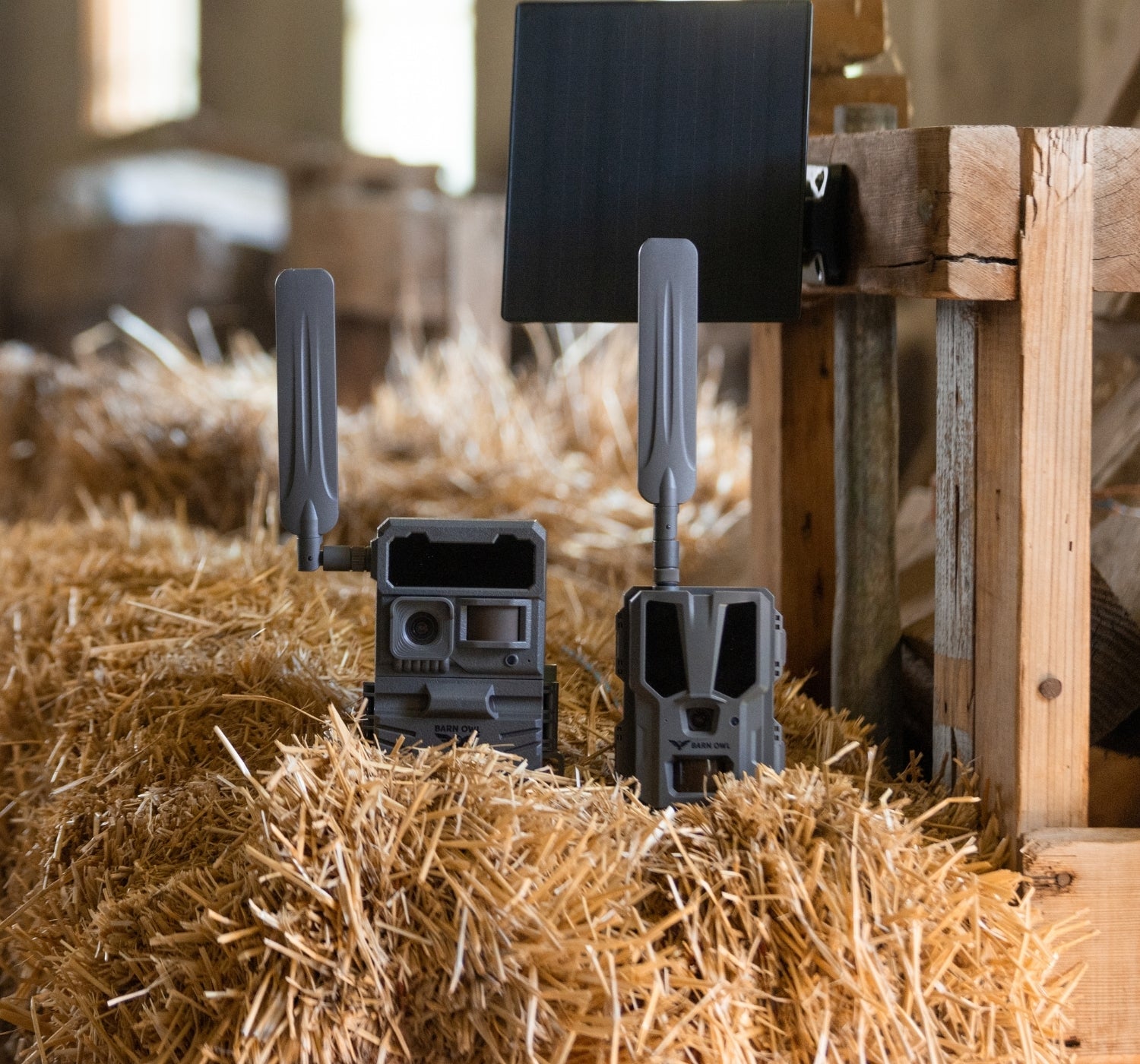
Solar Panels for Cellular Cameras All cellular cameras can benefit from the use of Solar Panels. Solar Panels keep the cameras charged by capturing sunlight which then creates an electrical charge and results in an electric current being passed to the camera. Some solar panels, such as the Barn Owl Solar Panels include an internal battery that stores the energy created. These panels help to ensure that the camera remains powered up and functional in remote areas with no electricity or infrastructure.   Cellular camera solar panels come in two types: external and integrated. In this article, we'll discuss the benefits of external solar panels and why they are the best for your remote monitoring system and needs. Topics: Replacement Costs Surface Area Portability & Positioning   Benefits of External Solar Panels Replacement Costs Reliable solutions never trust in a single point of failure. Solar Panels, like all electronic devices, are susceptible to damage and electrical faults. If you find yourself needing to replace the solar panel, replacing an external solar panel is typically less expensive and easier than replacing an integrated solar panel. When replacing an integrated panel, you will likely need to purchase an entirely new camera which means you will also have to go through the activation, configuration, and deployment steps all over again whereas, with an external panel, you only need to replace the panel and plug it into the existing camera.                    Surface Area & Energy Creation It doesn’t matter how many milliamps (mAh) a Solar Panel is rated for if it can’t collect enough sunlight to max out the rating. External panels give you the advantage of increasing your surface area for a greater charge over integrated panels with small surface areas with minimal charge capabilities. Being able to capture and collect more sunlight and energy results in faster charging times which is essential, especially in areas with limited sunlight such as those with long winters or those where cloudy days are common.     Portability and Positioning External solar panels also have the benefit of being able to be positioned independently of the camera for optimal sun exposure. External solar panels can be mounted on nearby trees, buildings, or posts, and can be positioned to allow the panel to capture the sun's rays from multiple angles, regardless of the camera's placement. This means that the camera can be placed in the best location for capturing footage, and the solar panel can be positioned separately for optimal sun exposure. With integrated panels, you have to balance the optimal camera angle with the optimal solar angle and will often find yourself making unwanted sacrifices. For best results, we recommend that you mount the solar panels facing East, South East.    —---   When it comes time to purchase your remote monitoring system, make sure that the Solar Panel is designed to adequately keep your camera powered on. Focus less on aesthetics and more on function and power delivery. And remember that when it comes to Solar Panels, the external panels are better equipped to capture more sunlight thanks to their larger surface area and ability to be mounted and positioned independently of the camera.    Shop All Solar Panels from Barn Owl
Introducing Detection Zones: Only Get AI Alerts That Matter

Barn Owl Blog

Introducing Detection Zones: Only Get AI Alerts That Matter

by on May 07 2026
  Your Barn Owl cameras just got a whole lot smarter, and every alert you receive from here on out is one actually worth your time. The problem with too many alerts If you have ever had your phone buzzing with notifications about passing cars, branches waving in the wind, or a neighbor's dog trotting through the edge of the frame, you know how quickly alert fatigue sets in. Your camera is doing its job by detecting motion and activity across the entire frame, but not everything happening in that frame is something you actually care about. When every alert feels the same, the important ones start to get lost in the noise. That is exactly what Detection Zones is designed to solve.  What are Detection Zones? Detection Zones is a brand new feature available now in the Barn Owl app that lets you define exactly which areas of your camera's view should trigger AI detection alerts. By tapping the grid squares covering parts of the frame you want to ignore, like a public road along the property edge, a tree line that sways in every breeze, or a section of yard that only neighbors pass through, you can deactivate AI detection in those areas entirely. From that point on, your camera only sends you an alert when something is detected inside the zones you have chosen to keep active. The result is a more focused, more useful set of alerts that tell you what is actually happening in the areas of your property you care about most. What does this mean for you? The biggest benefit of Detection Zones is something you will feel immediately: confidence that when your phone buzzes, it means something. Instead of filtering through a stream of notifications to figure out which ones matter, you can trust that every alert you receive is worth opening. For customers monitoring driveways, barns, gates, equipment yards, or entry points, this means you can keep AI detection sharp and focused on the areas that count, while tuning out the parts of the view that would otherwise create unnecessary noise. You set it up once, and your camera handles the rest. Detection Zones also gives you per-camera control, so you can configure each camera on your property independently based on what that specific view needs. A camera covering your barn entrance has different needs than one overlooking a pasture, and Detection Zones lets you treat them that way. How to set it up Getting Detection Zones running on your cameras takes less than a minute, and you do not need to update your app to access it since it is available right now. Open the Barn Owl app and tap the three dots on the camera you want to configure, then select AI and Alerts. Under the AI section, tap Detection Zones to open the grid view for that camera. From there, tap any grid squares covering the areas of the frame you want to exclude from AI detection. Greyed-out zones will not trigger AI detection alerts, and only the active zones you leave on will send you notifications going forward. That is all there is to it. Your camera is now focused on exactly where you want it to be. A note on how Detection Zones works Detection Zones applies specifically to AI-detected objects, including people, vehicles, and animals. If you are also managing alerts from motion-based triggers like wind or environmental movement, those are handled separately through your alert sensitivity settings in the app. You can use both tools together to get the cleanest, most relevant alert experience possible. Available now, at no extra cost Detection Zones is included as part of your Barn Owl subscription and is available now in the app for iPhone, Android, and tablet. If you are already a Barn Owl customer, you are getting this update for free, and you can start setting up your zones today. If you are considering Barn Owl for your property, Detection Zones is one of a growing list of AI powered features designed to make off-grid camera monitoring feel less like managing a feed of notifications and more like having a reliable set of eyes on the parts of your property that matter most. Learn more: barnowl.tech/pages/detection-zones  
Tips for Managing Your Remote Monitoring System

Barn Owl Blog

Tips for Managing Your Remote Monitoring System

by on Apr 06 2026
After a long winter, we recommend checking your remote monitoring system for signs of wear and tear from the elements. Keep your system is in good working order for the summer by completing the following these simple tips for managing and getting the most out of your remote monitoring system. Managing Your System Remotely: Before venturing out in the field, the first step is to familiarize yourself with all the features Barn Owl has introduced and to confirm that all alerts are set up correctly for your busy summer season. New Features for 2023: Battery Alerts: Your camera now offers battery alert settings. When Activated, you will receive an alert anytime your batteries drain below 25%.‍ Map Your Locations: With the recent Barn Owl Maps update, you can now easily see all your cameras in a single view. Barn Owl Maps make it much easier to navigate images and videos by camera.‍ Protect your camera(s) from Theft: Turn on the newly introduced “relocation alerts” and receive an alert each time your camera moves more than 100 meters from its current position. Systems Check: Confirm Image Settings: Review your image quality settings for each camera. Confirm that your image transmission settings are at the size and quality that fits your needs. Remember, all Barn Owl cameras have a default image setting of “small.” To increase your image quailty, update your settings to "large" from within your Barn Owl HQ account. ‍ Configure Your Alert Trigger Settings: Within your Barn Owl HQ account, double-check that all image and video triggers are configured correctly including Motion and Periodic Triggers.  are configured correctly so that you do not miss anything happening.     Onsite Maintenance: Cables and Connectors: Confirm that your wires are still in good working order and that there are no signs of damage or loose connections. ‍ Solar Panel Positioning: From high winds to snow loading, there is a chance that your solar panels may have shifted a bit during the winter months. You'll want to confirm that your solar panels are positioned and optimized for maximum sun exposure. ‍ Replace Old Batteries: If your cameras have been inactive for several months, we recommend replacing the old batteries with new ones. ‍ Clean Lens: Lenses can get dirty, resulting in reduced in image quality. While conducting system checks, take a moment to clean your camera lens with a clean cloth, towel, or rag.‍ Remove insects, nests, and webs: Critters love to cozy up to almost anything in the field. Spend a moment and remove any insects or webbings. Insects attract creatures that feed on them and have been known to chew through camera and solar panel cables. ‍ Fully Charge Solar Panel: If possible, you should attempt to charge your solar panels. You can do this with the AC or USB adapters. Following these simple tips will ensure you are getting the most out of your remote monitoring system and that the system is functioning as intended.
Ethical and Moral Considerations in Wolf Reintroduction: Diverse Stakeholder Perspectives

Barn Owl Blog

Ethical and Moral Considerations in Wolf Reintroduction: Diverse Stakeholder Perspectives

by on Mar 16 2026
The reintroduction of gray wolves into regions where they were previously removed has ignited profound ethical and moral debates among various stakeholders. This discourse encompasses conservationists advocating for ecological restoration, ranchers concerned about livestock safety, and local communities navigating the complexities of coexistence. Conservationist Perspective: Ecological Restoration and Moral Responsibility From an ecological standpoint, conservationists argue that humans have a moral obligation to restore species that were eradicated due to anthropogenic actions. The reintroduction of wolves is seen as a step toward rectifying past environmental harms and reestablishing natural predator-prey dynamics, which can lead to healthier ecosystems. This perspective emphasizes the intrinsic value of all species and the ethical imperative to preserve biodiversity. Furthermore, proponents highlight that restoring apex predators like wolves can enhance ecosystem resilience and integrity. Rancher Perspective: Livelihoods and Ethical Concerns Conversely, many ranchers express significant ethical concerns regarding wolf reintroduction, primarily focusing on the potential threats to their livelihoods. The predation of livestock by wolves not only results in economic losses but also raises questions about the fairness of imposing conservation initiatives that disproportionately affect rural communities. Some argue that urban populations, who may support reintroduction efforts, do not bear the direct consequences of living alongside predators. This dynamic can lead to feelings of disenfranchisement and moral distress among ranchers, who may perceive such policies as valuing wildlife over human well-being. Community Dynamics: Symbolism and Social Identity The wolf has become a symbol of broader societal conflicts, embodying tensions between urban and rural values, modern conservation efforts, and traditional land-use practices. This symbolism can exacerbate divisions, making consensus challenging. Addressing these moral and ethical debates requires acknowledging the diverse values and concerns of all stakeholders involved. Towards Ethical Coexistence: Collaborative Approaches Achieving an ethical and practical balance in wolf reintroduction necessitates collaborative approaches that respect the perspectives of both conservationists and those directly impacted, such as ranchers and local communities. Implementing non-lethal deterrent methods, offering fair compensation for livestock losses, and involving local stakeholders in decision-making processes can help mitigate conflicts. Building trust and fostering open communication are essential steps toward coexistence, ensuring that conservation goals align with the well-being of human communities. In conclusion, the ethical and moral considerations surrounding wolf reintroduction are multifaceted and deeply rooted in the values and experiences of diverse stakeholders. Recognizing and addressing these complexities is crucial for developing policies that are both ecologically sound and socially just.
Barn Owl Named Top Farm & Ranch Camera Company 2026 by AgriBusiness Review

Barn Owl Blog

Barn Owl Named Top Farm & Ranch Camera Company 2026 by AgriBusiness Review

by on Dec 11 2025
We are proud to share that Barn Owl has been named the Top Farm and Ranch Camera Company 2026 by AgriBusiness Review. This recognition means a great deal to our team, because it reflects both the trust of our customers and the validation of leaders across the agricultural industry. The award was based on nominations from readers and a thorough evaluation by a panel of C level executives, industry experts and the publication’s editorial board, as described in the certificate. A Recognition Rooted in Real Customer Impact Barn Owl was created to solve a problem that many ranchers know well. Long days and long distances often stand between them and the equipment, animals and infrastructure they rely on. In the feature article, AgriBusiness Review highlighted how Barn Owl grew from this challenge and how our mission has stayed focused on one idea: making remote monitoring possible anywhere Our camera systems are built to be simple to set up, rugged in the field and dependable in the moments that matter. The article describes how our ready to install kits, solar powered operation and cellular connectivity give ranchers instant access without the need for WiFi or on site maintenance. This combination of simplicity and durability was a key reason Barn Owl stood out in the evaluation. Designed for the Real World RangeCam 2 and RangeCam Live were also recognized for their flexibility across a wide range of environments. From monitoring water tanks to protecting calving areas to securing remote entrances, customers rely on Barn Owl to keep them connected when physical distance gets in the way. The editorial feature noted Barn Owl’s strong value, its reliable alert system and the engineering behind the scenes that protects every transmission. What This Award Means for Us This award is a milestone, but it is also motivation. We will continue to build tools that save time, reduce stress and help people protect the land and assets they care about. Our mission remains the same as the day Barn Owl began. Technology should serve the people who work the land, not the other way around. We are grateful to our customers for trusting Barn Owl and to AgriBusiness Review for recognizing the work our team puts in every day. If you would like to read the full feature story, you can find it here: https://www.agribusinessreview.com/barn-owl
Economic Implications of Wolf Reintroduction on Local Communities: A Balanced Perspective

Barn Owl Blog

Economic Implications of Wolf Reintroduction on Local Communities: A Balanced Perspective

by on Nov 21 2025
The reintroduction of wolves into various regions has sparked extensive debate, particularly concerning its economic impact on local communities. This discourse encompasses diverse sectors, notably tourism, agriculture, and public land use. While some stakeholders highlight potential economic benefits, others express concerns about adverse effects. This article aims to present a balanced analysis, incorporating perspectives from all sides. Tourism and Economic Benefits Proponents of wolf reintroduction often point to the potential for increased tourism. The presence of wolves can attract wildlife enthusiasts, photographers, and eco-tourists, leading to economic stimulation in local economies. For example, in Yellowstone National Park, the reintroduction of wolves has been associated with a boost in tourism, contributing significantly to the regional economy. Visitors drawn by the opportunity to observe wolves in their natural habitat have increased expenditures in the area, benefiting local businesses and services.  Similarly, regions that have fostered wolf-related tourism have experienced economic growth. Training programs for nature guides and the development of wildlife reserves have created jobs and supported local enterprises. These initiatives not only promote conservation but also provide economic opportunities for communities.  Agricultural Concerns and Livestock Depredation Conversely, the agricultural sector, particularly livestock producers, has voiced significant concerns regarding wolf reintroduction. The primary issue revolves around predation, where wolves may attack cattle, sheep, and other domestic animals, leading to direct economic losses for ranchers. Beyond the immediate loss of livestock, ranchers may incur additional costs related to implementing protective measures, increased labor, and stress-induced weight loss in animals, which can affect market value. In some instances, regions have declared states of emergency due to increased incidents of wolf attacks on livestock and pets. For example, Catron County in New Mexico faced such challenges, prompting local authorities to seek financial aid and support from the state. Public Land Use and Management The reintroduction of wolves also impacts public land use and management. Hunters and outfitters have reported changes in game populations and behaviors, potentially affecting hunting opportunities and associated revenues. The presence of wolves can lead to alterations in prey distribution, making hunting more challenging and impacting businesses reliant on hunting tourism. Moreover, managing wolf populations requires public resources for monitoring, research, and conflict mitigation. These efforts necessitate funding and can influence land use policies, sometimes leading to restrictions or changes in land access and utilization. Balancing Perspectives and Moving Forward Addressing the economic implications of wolf reintroduction necessitates a nuanced approach that considers the diverse perspectives of all stakeholders. Implementing comprehensive management plans that include compensation programs for livestock losses, investment in non-lethal deterrent methods, and community engagement can help mitigate conflicts. Additionally, promoting ecotourism and educational initiatives can enhance public understanding and support for wolf conservation. Ultimately, achieving a balance between ecological benefits and economic realities requires collaborative efforts, informed policy-making, and ongoing research to adapt strategies that support both wildlife conservation and the livelihoods of local communities.

Showing 6/300