
Choosing the Right Fence: Common Livestock Fencing Options for Open Pastures
by Whitley Crow
on Jul 18 2025
Fencing is one of the most important investments you’ll make when managing open pastures. Whether you’re raising cattle, goats, or horses, the right fence keeps your animals in, predators out, and your operation running smoothly. With so many options available, it can be tough to know where to start. This post breaks down the most common fencing types used for livestock in open pasture settings, along with their best uses, pros, and cons.
1. Woven Wire Fencing
Woven wire is a sturdy, grid-like fence ideal for smaller livestock such as sheep, goats, and pigs. The tightly spaced wires prevent animals from slipping through and help keep predators at bay.
-
Best for: Sheep, goats, pigs, and some cattle
-
Pros: Very secure; long-lasting
-
Cons: More expensive and labor-intensive to install
-
Tip: Add a strand of electric wire on top to discourage climbing or leaning.

2. Barbed Wire Fencing
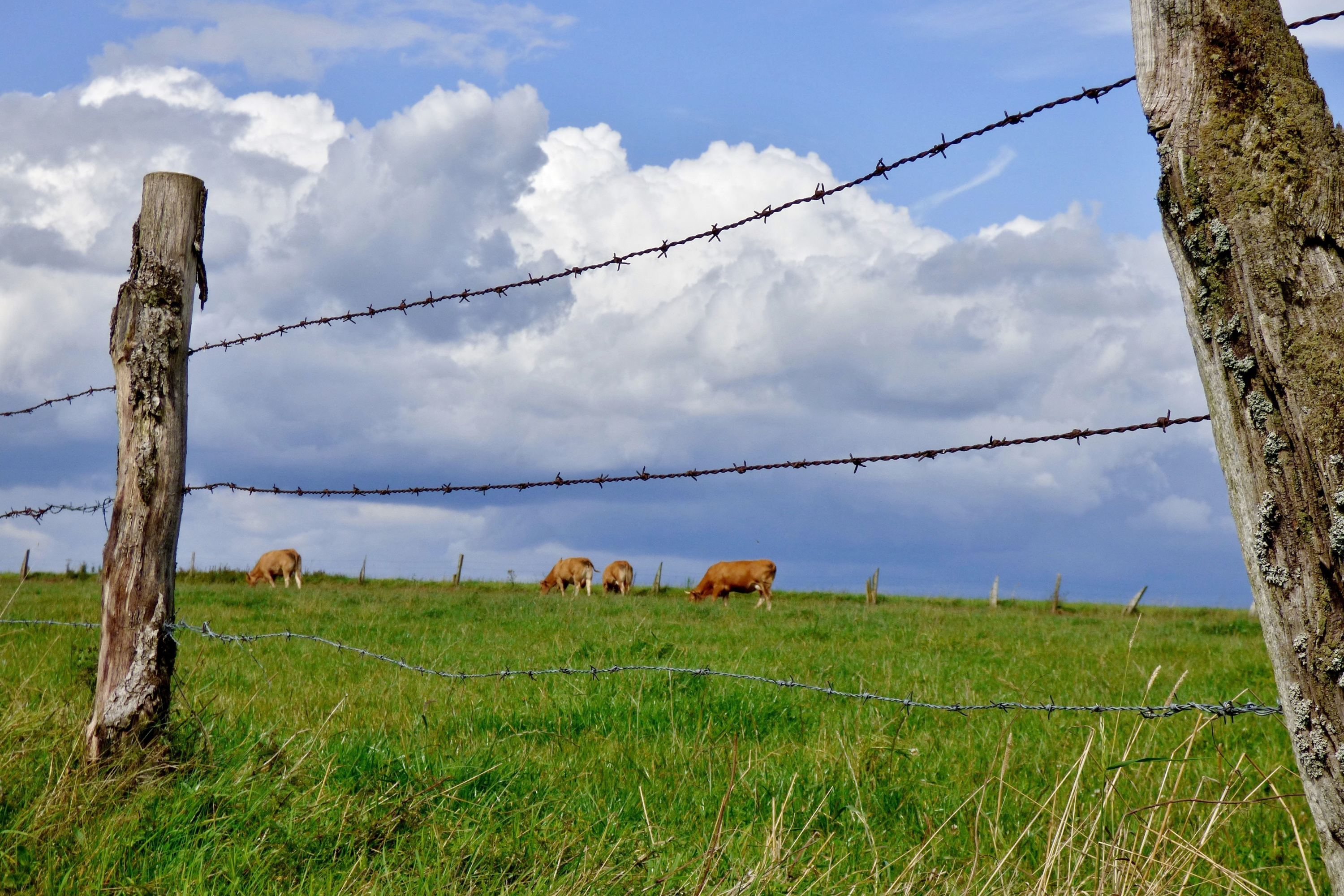
One of the most traditional fencing options, barbed wire is commonly used for cattle. It consists of several strands of wire with sharp barbs spaced along their length.
-
Best for: Cattle
-
Pros: Cost-effective; easy to find materials
-
Cons: Can injure animals, especially horses; not ideal for smaller livestock
-
Note: Always check your local regulations—some areas restrict barbed wire usage near public roads.

3. High-Tensile Wire Fencing
High-tensile wire fencing uses smooth wire stretched under high tension. It can be electrified for added control and is popular in rotational grazing systems.
-
Best for: Cattle, rotational grazing setups
-
Pros: Long lifespan; low maintenance; effective with fewer materials
-
Cons: Requires proper bracing and installation; less effective for very small livestock unless electrified

4. Electric Fencing
Electric fences create a psychological barrier more than a physical one, but they’re incredibly effective when used properly. Electric fencing can be made from wire, polywire, or polytape and is often used for temporary or rotational setups.
-
Best for: Cattle, pigs, sheep, and goats in managed grazing systems
-
Pros: Affordable; flexible; easy to install and move
-
Cons: Needs a reliable power source; not a physical barrier by itself

5. Pipe or Rail Fencing
This highly visible and strong fencing is often seen in horse pastures and high-value livestock operations. It uses wood or metal rails for a solid and attractive barrier.
-
Best for: Horses and high-value animals
-
Pros: Durable and safe for horses
-
Cons: Expensive; not practical for large-scale pasture fencing

6. Board Fencing
Wooden board fencing is another safe and attractive option for horses and smaller operations. Though visually appealing, it requires regular maintenance.
-
Best for: Horses and small pasture areas
-
Pros: Safe and visible
-
Cons: High cost and frequent upkeep

7. Temporary Fencing (Polywire or Polytape)
Ideal for rotating pastures or temporary enclosures, polywire and polytape are lightweight and easy to move. They're typically electrified to keep animals in place.
-
Best for: Rotational grazing or temporary paddocks
-
Pros: Portable; affordable
-
Cons: Less durable; short-term use

Which Fence is Right for You?
The best fencing depends on the livestock you’re raising, your budget, and whether you need a permanent or temporary solution. Here’s a quick guide:
|
Livestock |
Best Fence Options |
|
Cattle |
Barbed wire, high-tensile, electric |
|
Goats/Sheep |
Woven wire, electric netting |
|
Horses |
Board fencing, pipe/rail, electric tape |
|
Pigs |
Woven wire with electric strand |
|
Mixed Livestock |
Combination fencing or multi-purpose layouts |
Barn Owl cameras are designed to mount easily to any type of livestock fencing—whether it’s barbed wire, high-tensile, woven wire, board, or pipe. They attach securely to fence posts or rails using straps, brackets, or clamps. For even more flexibility, our Universal Mount gives you additional options to install cameras exactly where you need them, no matter the fencing setup.

Final Thoughts
Investing in the right fence now saves time, money, and headaches down the line. It also protects your animals and gives you peace of mind knowing your pastures are secure. If you're just starting out, you may want to test a temporary or electric setup before committing to a permanent system.
Next up: Woven Wire Fencing: A Reliable Choice for Livestock Protection
Share


